
The Jaecoo J7 is one of the more interesting Chinese SUVs to arrive in South Africa. With its boxy styling, premium-looking interior, large touchscreen, and long list of standard features, the J7 is clearly aimed at buyers looking for something that feels more expensive than its price tag suggests.
But what is the Jaecoo J7 like to drive, how much does it cost in South Africa, and can it really compete with established SUVs such as the Volkswagen Tiguan, Kia Sportage, Mazda CX-5 and Haval H6?
I spent time with the Jaecoo J7 Glacier to find out.
Jaecoo J7 price in South Africa
The Jaecoo J7 price in South Africa starts at approximately R549,000 for the entry-level Vortex.
The range consists of three derivatives:
- Jaecoo J7 Vortex – entry-level
- Jaecoo J7 Glacier – mid-spec
- Jaecoo J7 Inferno – top-spec
The Jaecoo J7 Glacier tested here costs around R579,000 to R580,000, depending on the applicable pricing.
That places the J7 in a highly competitive part of the South African SUV market, where it goes up against vehicles such as the Volkswagen Tiguan, Kia Sportage, Mazda CX-5 and Haval H6.
It can also attract buyers considering more premium alternatives, particularly because of its design and equipment levels.
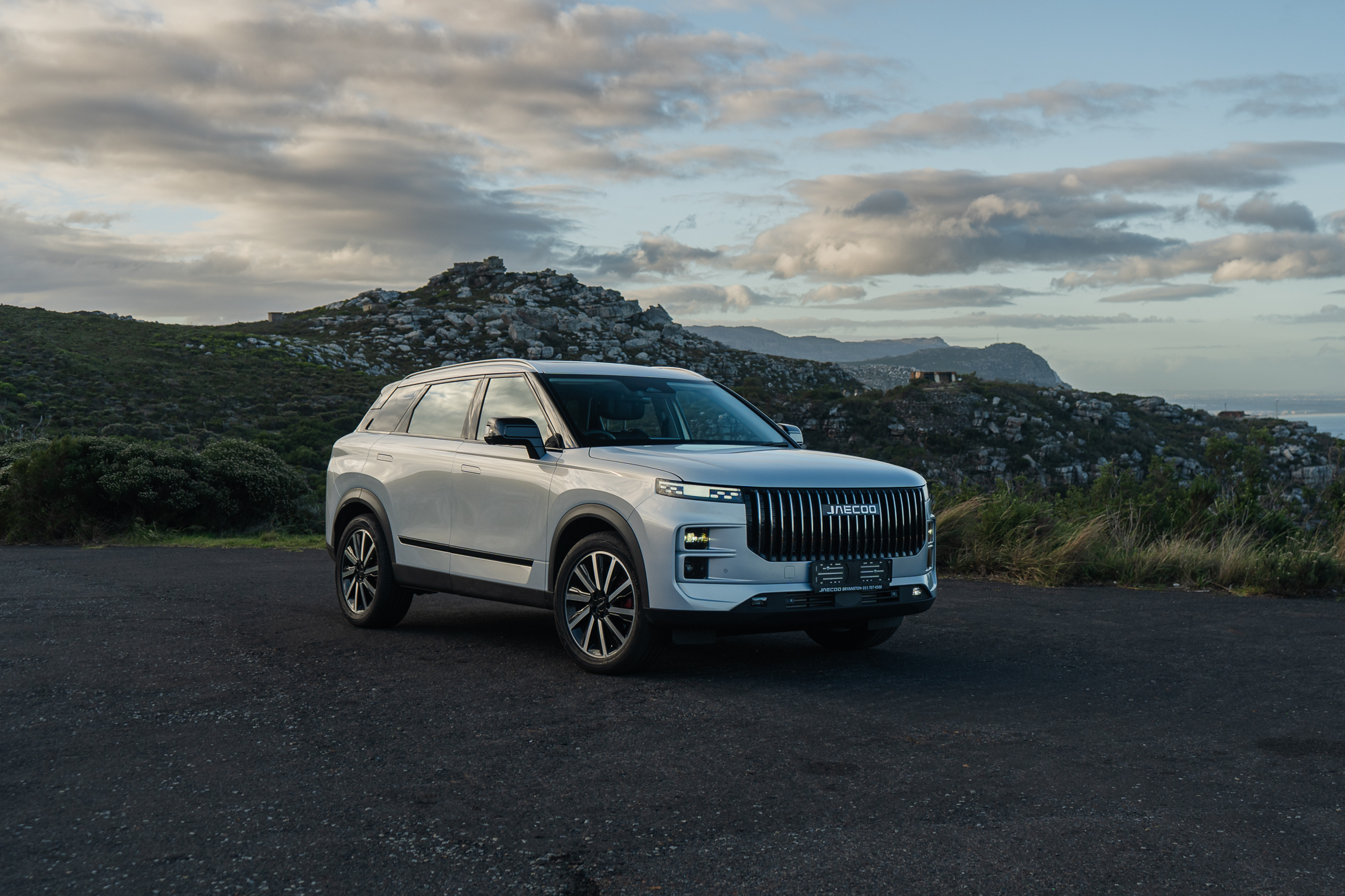
What is the Jaecoo J7
If you’re unfamiliar with the brand, Jaecoo is part of the Chery Group, which also includes Chery, Omoda, and Lepas. While Chery has a broader mainstream SUV range, Jaecoo positions itself further towards the premium end of the market, with an emphasis on design, technology, and a more upmarket cabin.
The J7 is one of its key models: a five-seat SUV for buyers who want something stylish and well-equipped without the pricing of established luxury brands.
Engine and Powertrain specifications
At its core, the Jaecoo J7 uses a 1.6-litre turbocharged four-cylinder petrol engine. It produces 145 kW and 290 Nm of torque, paired with a 7-speed dual-clutch automatic
The same basic engine can also be found in other Chery Group products, including the Omoda C5 GT. On paper, 145 kW and 290 Nm give the J7 enough performance for everyday driving, highway cruising and overtaking.
Exterior and Design
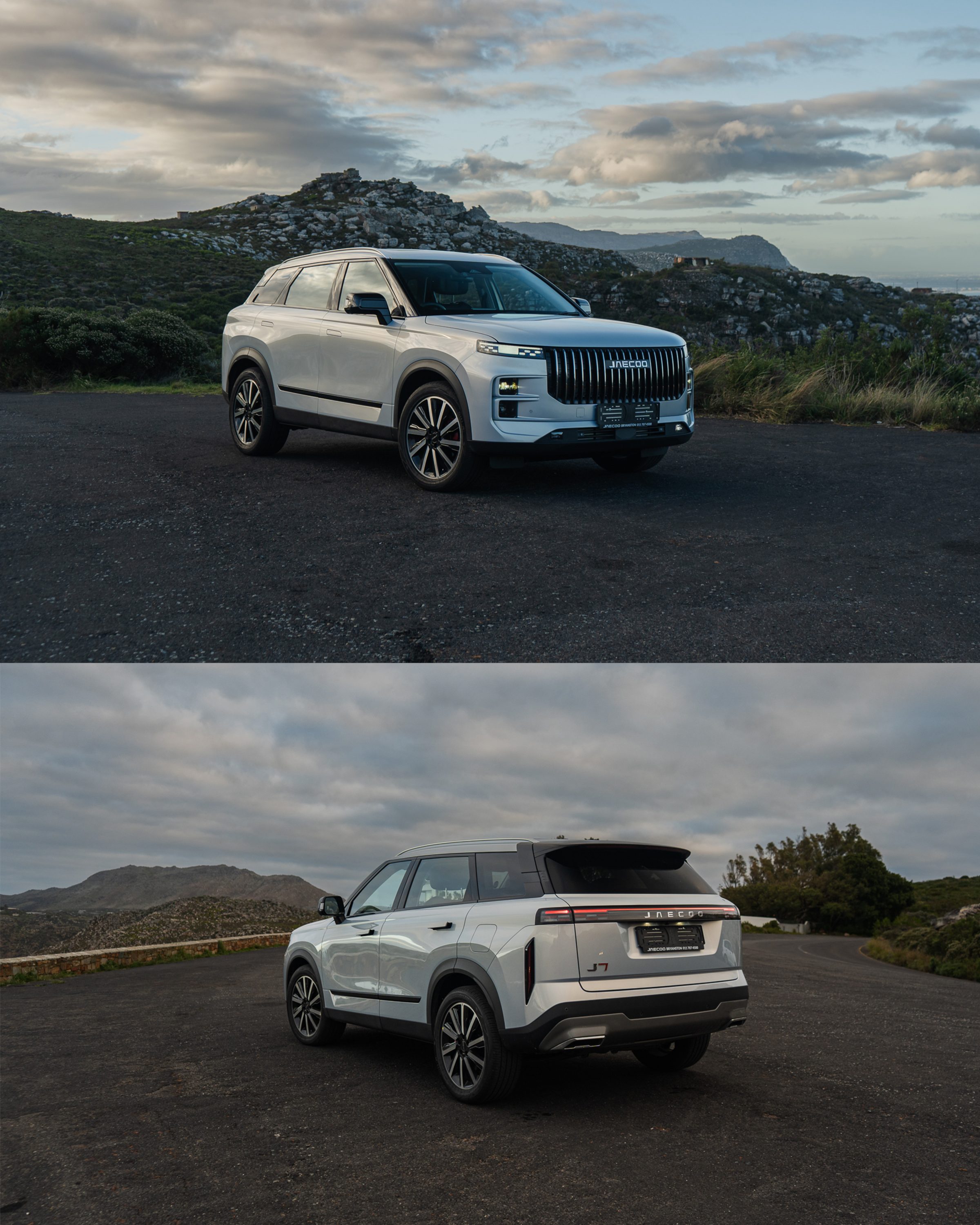
The first thing you’re likely to notice about the J7 is its styling. It has a very upright and boxy appearance, with several design elements that give it a distinctly premium look. The front features distinctive checker-style LED headlights, while the 19-inch two-tone alloy wheels on the Glacier add to its road presence.
The side profile is particularly interesting. The flat fenders, sharp creases, and upright proportions give the J7 a muscular appearance. The large side mirrors and flush-fitting pop-out door handles also contribute to the premium look.
There are obvious similarities to the design language used by SUVs such as the Land Rover Defender and Range Rover. That’s not necessarily a bad thing. If you like the look of those vehicles but don’t have a Range Rover budget, the J7 offers some of that visual appeal at a much lower price.
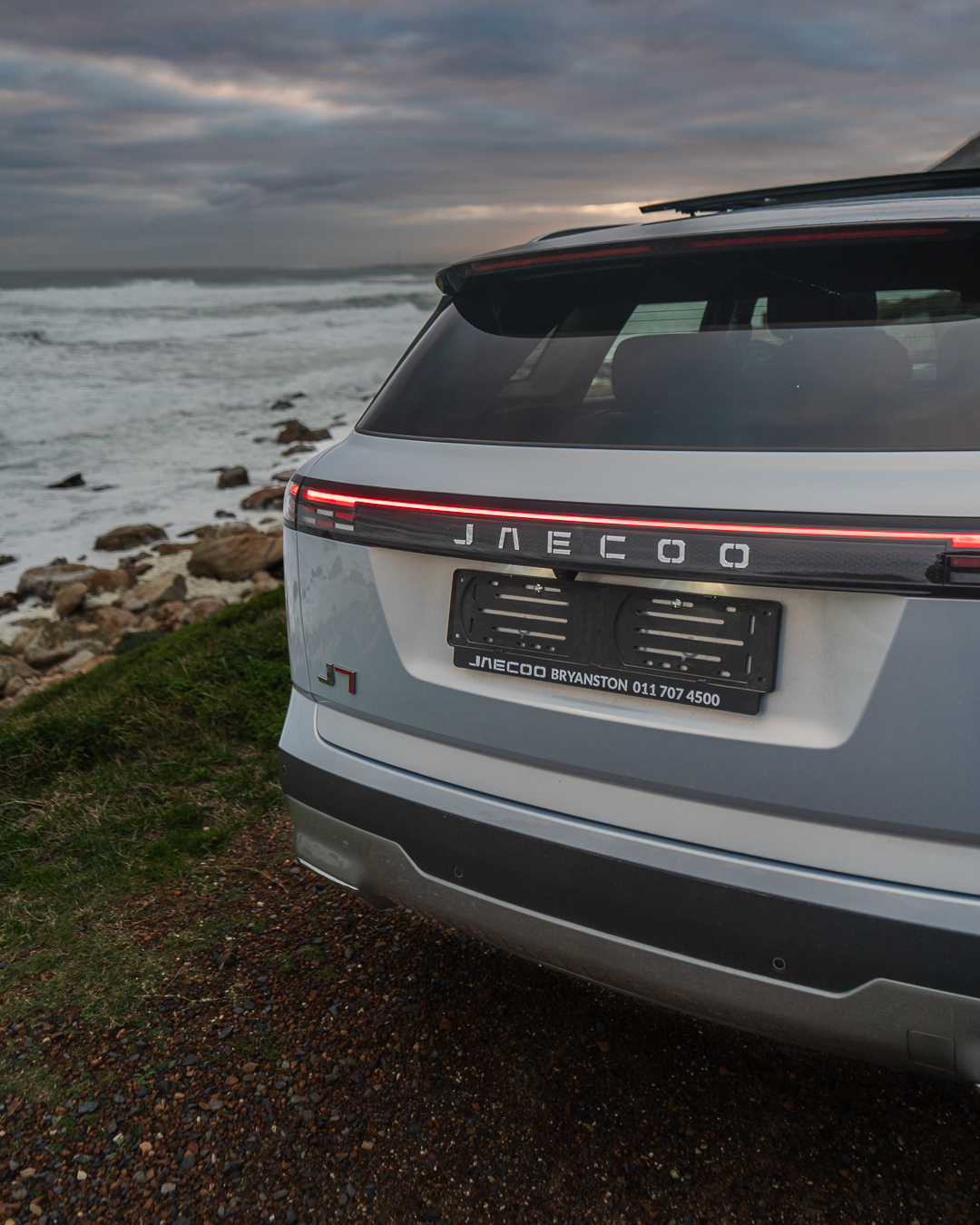
At the rear, a full-width light bar connects the slim taillights, while the Jaecoo and J7 badges are neatly integrated into the tailgate. There are also two exhaust-style openings in the rear bumper, although the actual exhaust outlets are positioned underneath the vehicle.
Interior and Tech
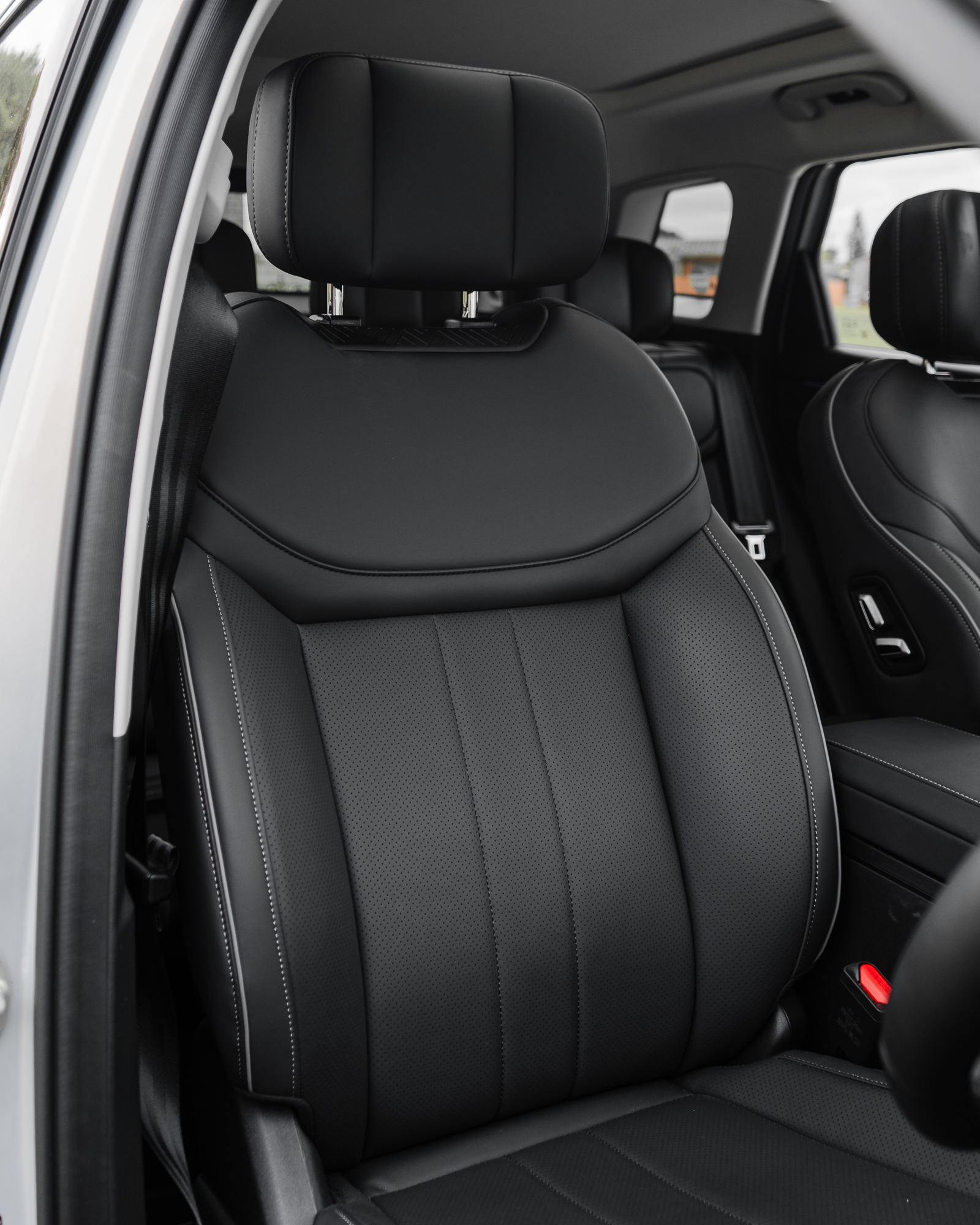
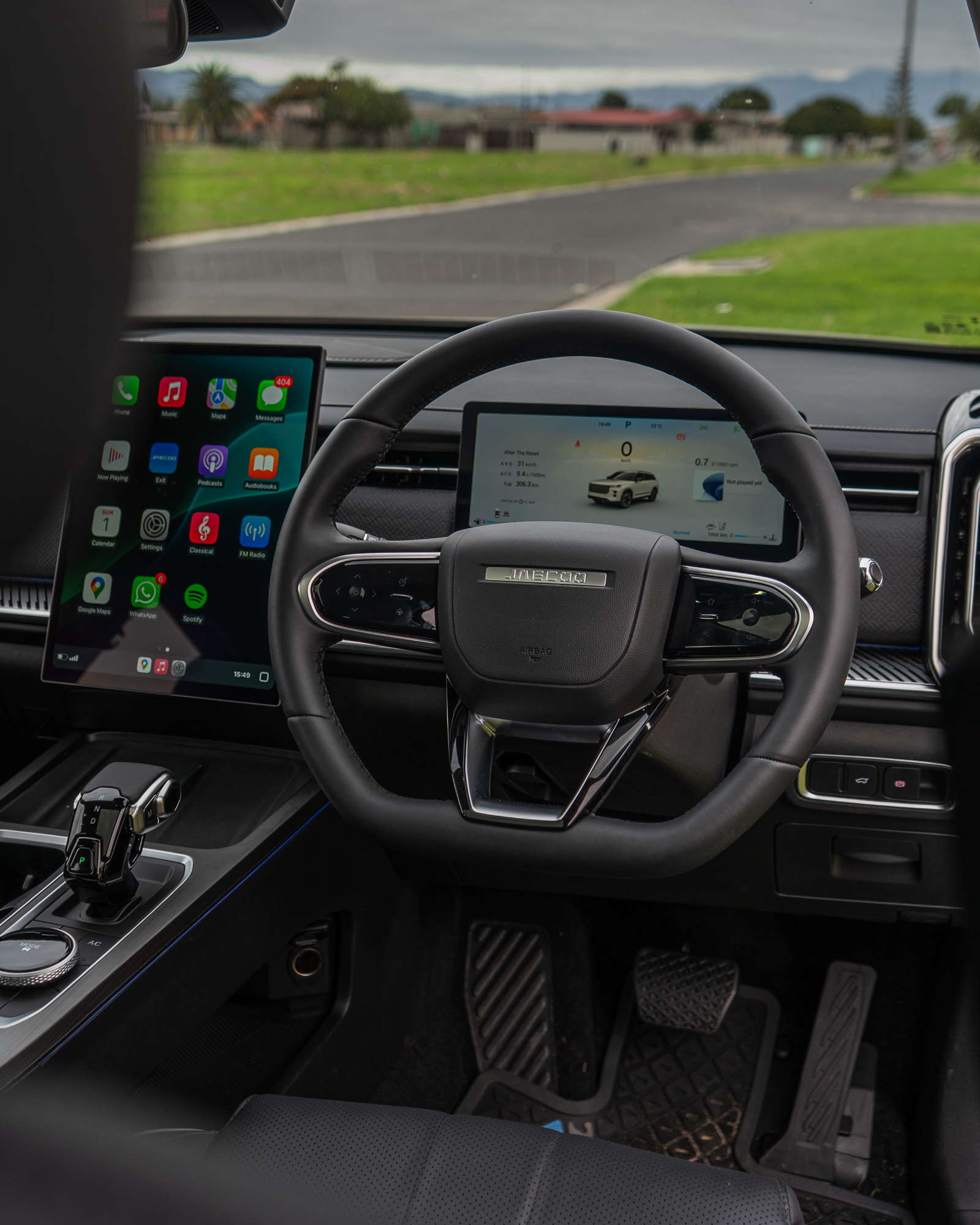
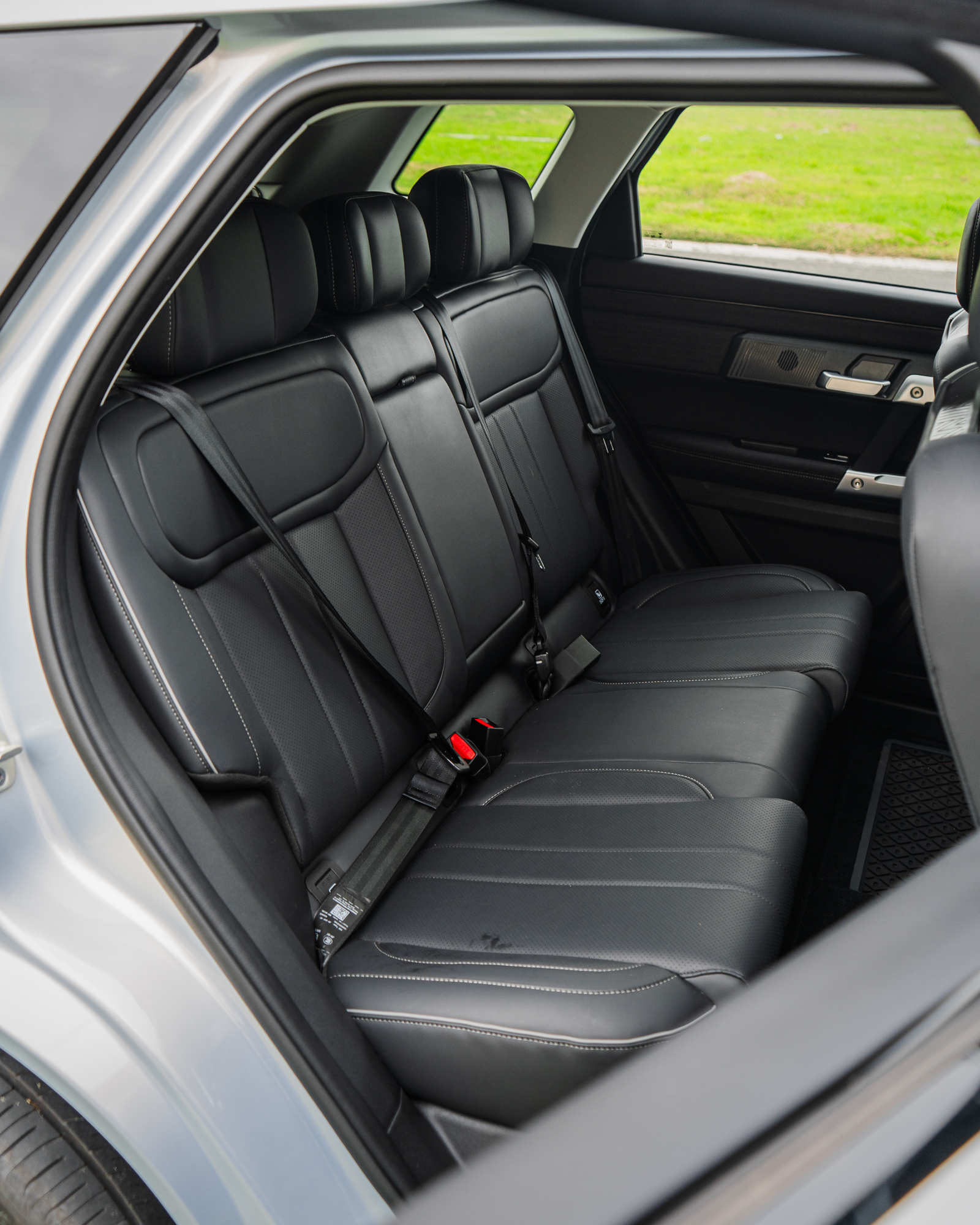
The interior of the J7 is arguably one of its biggest selling points. The cabin looks and feels more expensive than you might expect from an SUV costing around R550,000. There are soft-touch surfaces, leather upholstery, chrome detailing and black finishes throughout the cabin. The dashboard features a textured, rubberised leather-like finish, while the various trims and patterns help give the interior some visual interest.
The cabin is also relatively quiet on the move, with limited road and wind noise making their way inside.
Tech
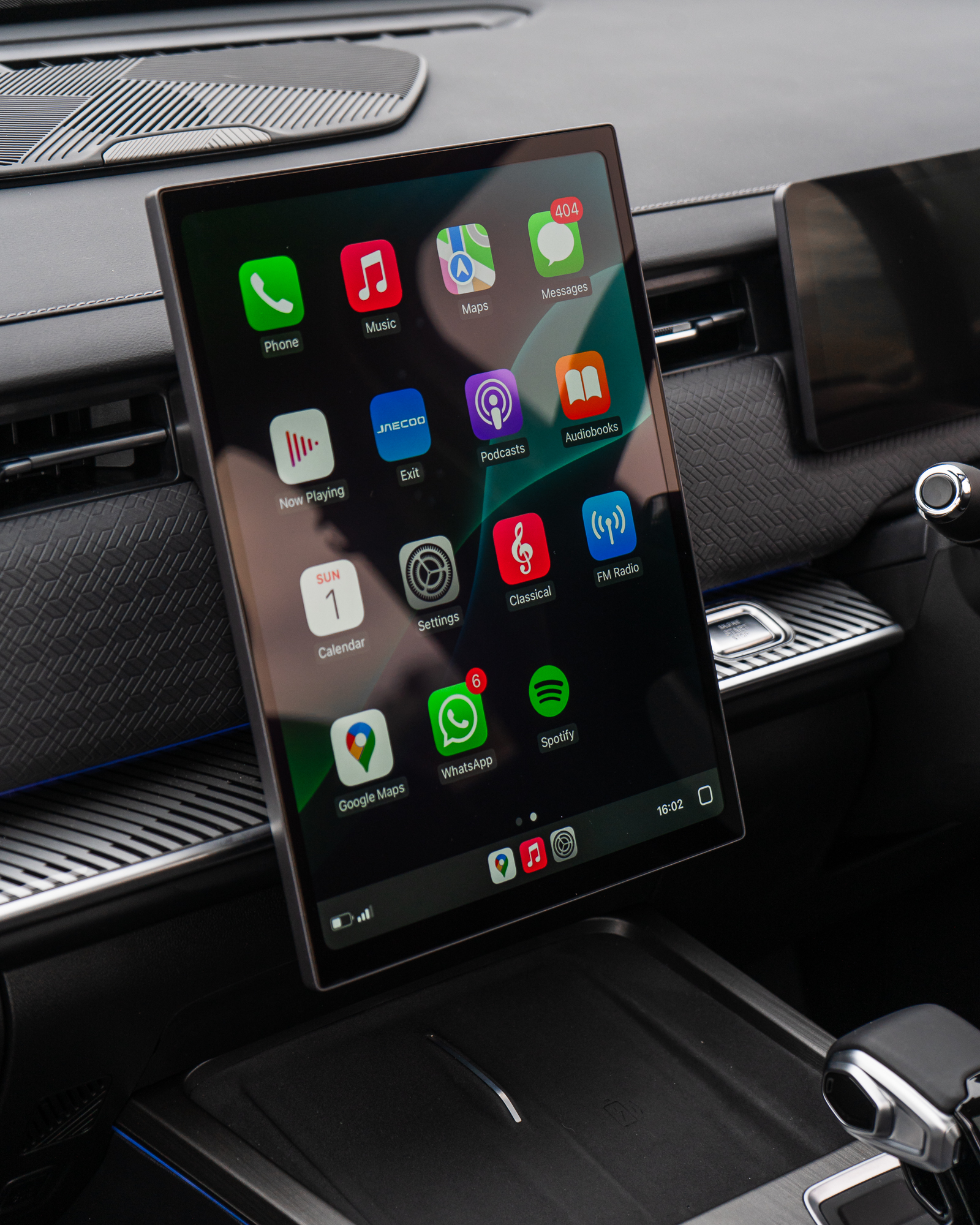
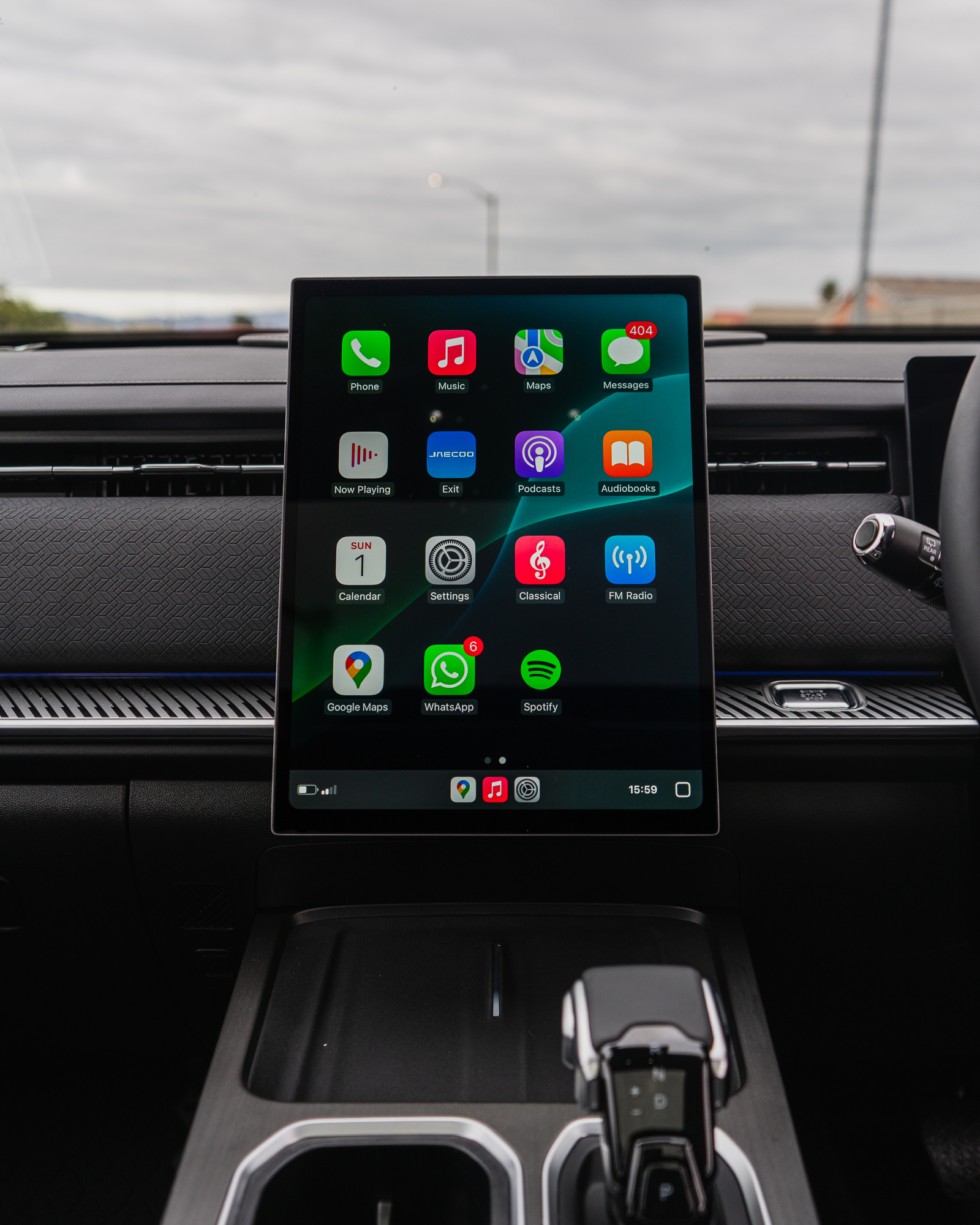
On the tech front, the centrepiece of the J7 interior is a huge 14.2-inch portrait touchscreen. It comes standard across the range and supports wireless Apple CarPlay and Android Auto.
The screen is one of those features that immediately attracts attention. It’s so large that people seeing the J7 for the first time often ask whether it is a television or a tablet.
However, there is one significant downside.
The touchscreen is not perfect
Jaecoo has moved a lot of the vehicle’s functions into the touchscreen, including the climate controls. There are also no traditional physical volume controls. You can adjust the volume using the steering-wheel controls or through the touchscreen, but this isn’t always the most convenient solution.
For example, if the passenger wants to change the audio volume, they can’t simply reach for a physical knob. It’s a good example of how an otherwise impressive piece of technology can compromise everyday usability.
Jaecoo J7 features
The J7 comes with a substantial list of standard equipment, although exact specifications vary between derivatives. Check out our YouTube video as we went into in-depth details.
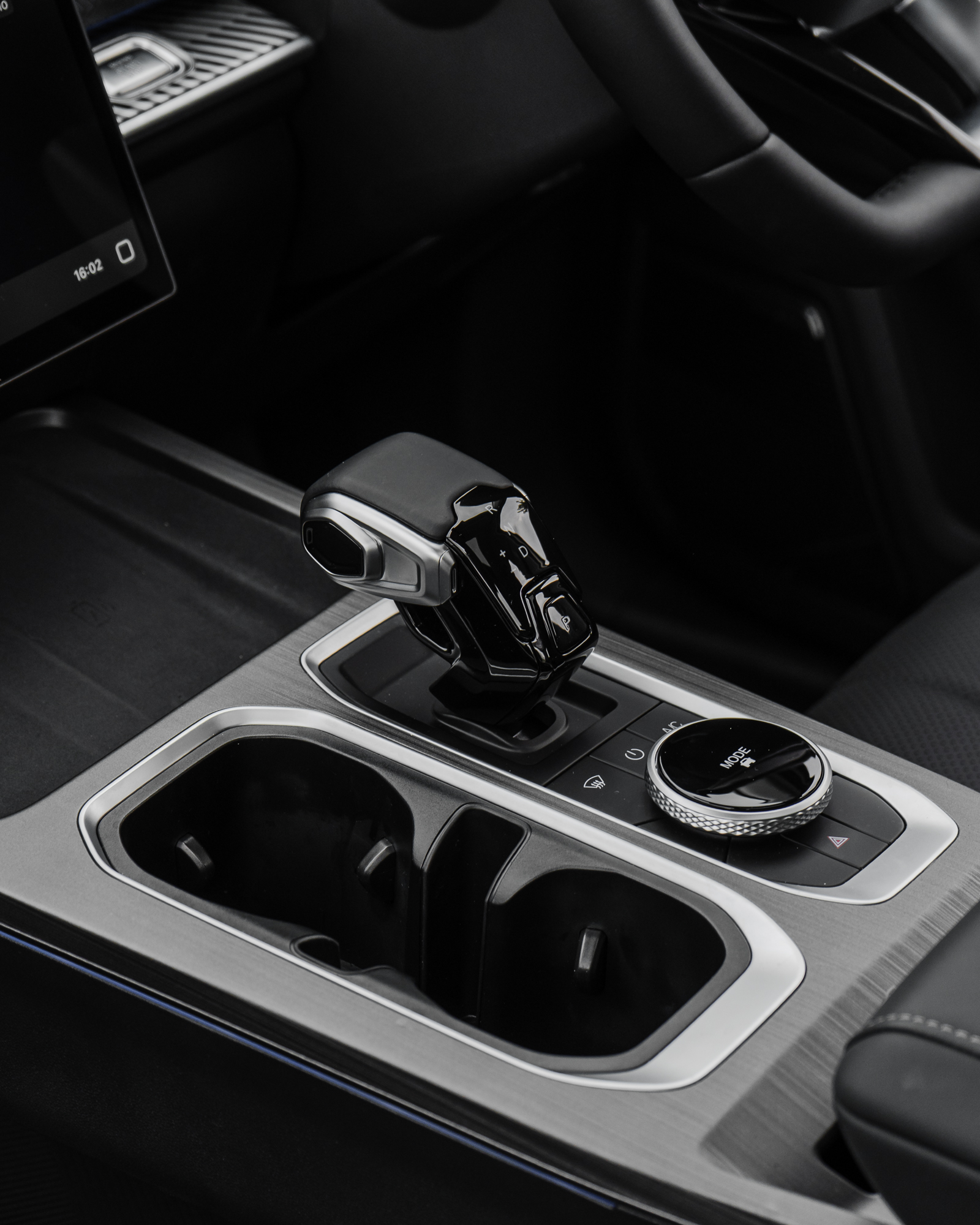
The gear selector is another interesting design feature, with a fighter-jet-inspired joystick-style design.
There are also several subtle design cues throughout the cabin that appear inspired by the Land Rover Defender, particularly around the air vents and door handles.
Comfort and Practicality
The J7 is a five-seater and offers enough interior space for typical family use.
The front seats are comfortable and, depending on specification, offer heating, ventilation, lumbar adjustment and electric adjustment. One particularly useful feature is the additional control on the side of the front passenger seat. This allows rear passengers to move the front passenger seat forward if they require additional legroom.
It’s a small detail, but it demonstrates that Jaecoo has considered how the vehicle will actually be used.
The Jaecoo J7 boot capacity varies depending on the derivative. Lower-spec versions offer around 412 litres, while the range-topping Inferno increases this to approximately 500 litres. The boot also gets several useful features, including: Electric tailgate, LED lighting, 12V power socket, Shopping hooks, Integrated speakers, 60/40 split-folding rear seats. For a five-seat family SUV, the J7 offers a practical amount of luggage space.
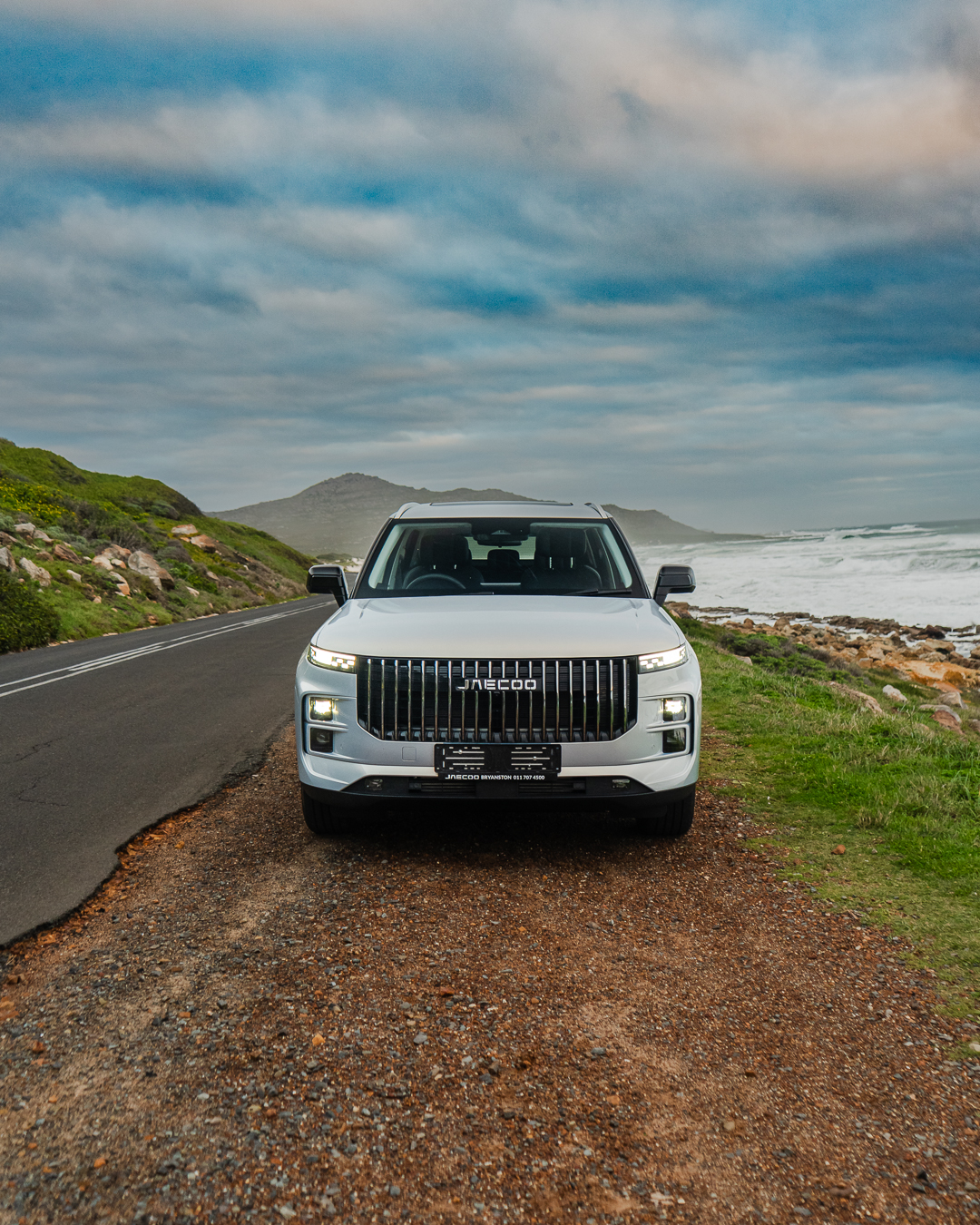
What is the Jaecoo J7 like to drive?
The Jaecoo J7 driving experience is more refined than I initially expected. The steering has a good balance to it. It’s not excessively light, but it doesn’t feel unnecessarily heavy either. The throttle response is also smoother than some of the Chery Group products I’ve driven previously.
With 145 kW and 290 Nm, the J7 has enough power for everyday driving. The seven-speed dual-clutch transmission shifts quickly when accelerating and overtaking, and during my time with the vehicle I never felt that the gearbox was struggling to keep up with the engine.
The Glacier also offers Eco, Normal and Sport driving modes. The J7 isn’t intended to be a performance SUV, but it doesn’t need to be. Its strengths are comfort, refinement and effortless everyday performance.
Fuel consumption
With Chinese cars having the bad reputation of being heavy drinkers when it comes to fuel, one of the most important questions for potential buyers is how much fuel the Jaecoo J7 uses.
While Jaecoo claims fuel consumption of around 7–8 L/100 km, during my real-world testing, however, I recorded between approximately 9.2 and 10.4 L/100 km.
Actual fuel consumption will depend on traffic, driving style, road conditions, and how the vehicle is used, but my figures are worth considering if fuel economy is an important part of your buying decision.
Jaecoo J7 safety features
The Jaecoo J7 safety features are another strong part of the package.
The vehicle includes a range of active and passive safety systems, including:
- ABS
- Electronic Stability Programme
- Electronic Brakeforce Distribution
- Traction control
- 360-degree surround-view camera
- Lane Keep Assist
- Forward Collision Warning
- Rear Collision Warning
- Driver Monitoring System
- Child Monitoring System
- ISOFIX child-seat mounting points
The 360-degree camera is particularly useful in a vehicle of this size, making parking and navigating tight spaces easier.
How does the Jaecoo J7 fare against its rivals?
The Jaecoo J7’s competitors in South Africa include several established SUVs.
The Volkswagen Tiguan, Kia Sportage and Haval H6 all occupy a similar general market space, although their specifications, pricing and positioning differ. Where the J7 attempts to distinguish itself is through its combination of styling and standard equipment.
The interior, large touchscreen, panoramic roof, premium audio system and extensive safety technology give the J7 a specification list that reads more like that of a considerably more expensive vehicle.
This is also where Chinese car manufacturers have become increasingly competitive: offering a large amount of technology and equipment without necessarily asking buyers to pay luxury-car prices.
Is the Jaecoo J7 like a Range Rover?
This is probably the question you’ll hear most often when looking at the J7.
The answer depends on what you’re comparing.
In terms of design, there are clear similarities in the J7’s upright proportions, boxy shape, flat surfaces, and various exterior and interior design details. In terms of price, however, the two sit in completely different categories.
The J7 isn’t a replacement for a Range Rover, but it does offer an alternative for buyers who like that particular design philosophy and want a more affordable SUV. That’s ultimately where the J7’s appeal lies.
Verdict:
The 2025 Jaecoo J7 is an interesting example of how quickly the South African SUV market is changing.
For around R549,000 to R580,000, depending on the derivative, you’re getting a stylish five-seat SUV with a 1.6-litre turbocharged engine, 145 kW, 290 Nm, a seven-speed dual-clutch transmission and a substantial amount of technology.
The J7 also looks considerably more expensive than its price suggests. The interior is comfortable and well finished, the equipment list is generous, and the driving experience is refined enough for everyday family use.
It isn’t perfect.
The touchscreen-heavy interface can be frustrating, particularly when basic functions such as climate and audio controls are buried inside menus. My real-world fuel consumption was also higher than Jaecoo’s claimed figures.
But those are relatively small compromises within the broader package.
If you’re shopping for a mid-size SUV in South Africa and want something that combines distinctive styling, a premium-looking interior, plenty of technology and a competitive price, the Jaecoo J7 is certainly a vehicle worth considering. And if you’ve been looking at the J7 because you like the design of the Range Rover or Defender, you may find that this Chinese SUV delivers some of the visual appeal without requiring anything close to the same budget.
